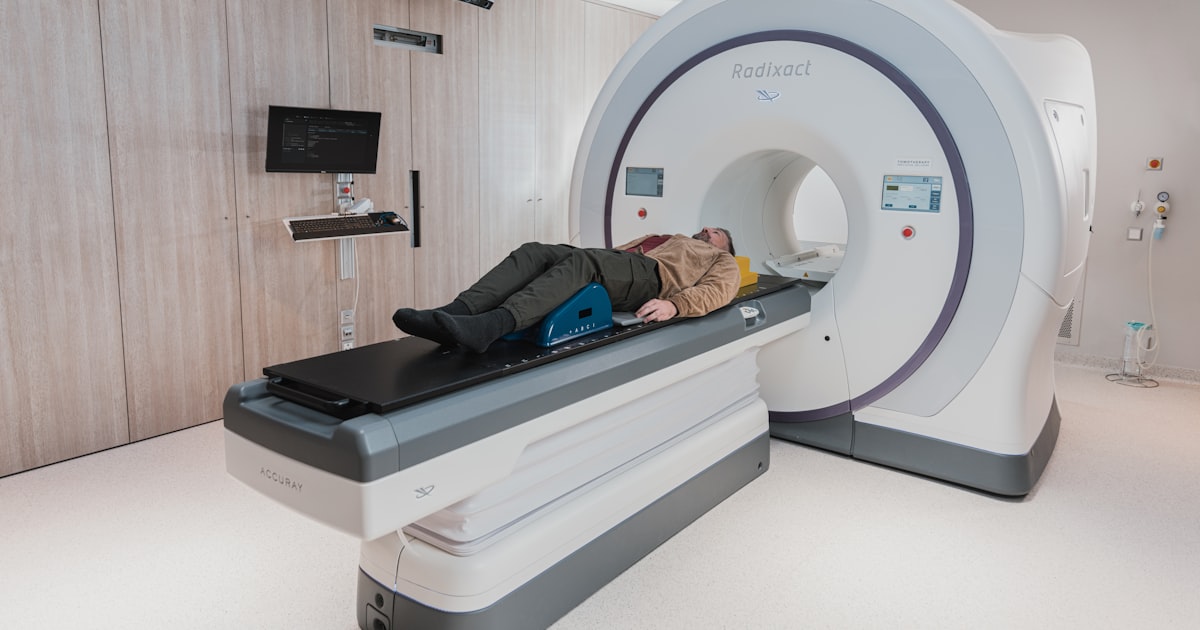
Photo: Accuray on UnsplashThis image was sourced from Unsplash. JobXi accepts no responsibility for its content.
Industry News
A few things to notice. That entry-level range is wide because it includes people who just passed their boards and those with two years of solid experience. If you're brand new, expect to start near $60,000 in most markets. But if you can land a hospital job with a night shift, your first-year take-home could hit $75,000—that's the power of differentials we talked about.
Mid-career is where you hit your stride. Most techs who stick with it for 3-6 years see a steady climb, especially if they pick up additional certifications or move into a supervisory role. By senior level, you're typically running the department, training new hires, or working in a high-acuity setting. The top senior techs at major teaching hospitals in cities like San Francisco or Boston can push past $110,000.
Notice something interesting? Texas pays lower nominal dollars but has a much lower cost of living. A Houston MRI tech earning $82,000 actually has more purchasing power than a Bay Area tech earning our $113,000 average after you account for rent and groceries. The San Francisco number looks amazing until you see that a modest one-bedroom apartment runs $3,500 a month.
But here's the honest bottom line: if you're a traveling MRI technologist, these are table stakes. Travel techs in hot markets like Seattle, Boston, or the Bay Area can command $2,200 to $2,800 per week—that's over $114,000 to $145,000 annualized. The trade-off is no PTO and having to manage your own housing.
MRI Technologist Salary in 2026: What You'll Actually Earn
JobXi Editorial Team·June 2, 2026
TL;DR
- The national average MRI technologist salary in 2026 is approximately $83,000, but half of all techs earn between $72,000 and $92,000 depending on location and shift.
- If you work nights, weekends, or at a Level 1 trauma center, you can add $8,000 to $15,000 to that base number—sometimes more.
- Your single biggest pay lever isn't experience—it's geography. Moving from a low-paying state to a high-paying one can boost your income by 35% or more.
National average and what it doesn't tell you
Let's cut through the noise. You've probably seen the Bureau of Labor Stats or some salary site throw out a number around $80,000 for MRI technologists. And it's not wrong, exactly. But like most averages, it hides the real story. For 2026, our analysis of JobXi listings, industry surveys, and labor department data puts the national average at $83,250. That's up from about $77,000 in 2022—a solid 8% climb in four years. Not bad, but here's the catch: that's the mean. The median is lower, at $79,500. And the middle 50%—the range where most working techs actually land—spans from roughly $72,000 to $92,000. So what doesn't the average tell you? A lot. First, shift differentials are massive in this field. A hospital MRI tech working 7pm to 7am Friday through Sunday can easily earn 25-30% more than a same-experience tech working Monday-Friday 9-5 at an outpatient clinic. Second, the national average lumps together people in rural hospitals, big city trauma centers, and mobile imaging vans. Those jobs pay differently—often by $20,000 or more. And third, certification matters. Techs with an ARRT (MRI) credential and a bachelor's degree consistently out-earn those with only a certificate, even with the same years on the job. In short: the average is a starting point, not a promise. Your actual check depends on three things: where you work, when you work, and what's on your resume.Salary by experience level
Experience is the second-biggest pay driver after location. But here's something most guides won't tell you: the biggest jump comes between year one and year three. After year five, raises tend to flatten unless you change roles or facilities. Here's the breakdown for 2026 based on real job postings and self-reported data from MRI techs across the US:| Experience Level | Typical Years | Annual Salary Range | Hourly Range |
|---|---|---|---|
| Entry-level | 0-2 years | $60,000 - $72,000 | $29 - $35 |
| Mid-career | 3-6 years | $73,000 - $88,000 | $35 - $42 |
| Senior | 7+ years | $89,000 - $105,000 | $43 - $50 |
Top-paying states and cities
This is where the real money is. If you're willing to relocate—or if you already live in one of these metro areas—your salary can jump 35-40% over the national average. Let's look at the data:| State / City | Average Annual Salary | Cost of Living Index | Outpatient Clinic Range |
|---|---|---|---|
| California (San Francisco) | $113,000 | 172 (very high) | $101,000 - $125,000 |
| Massachusetts (Boston) | $101,000 | 149 (high) | $91,000 - $112,000 |
| Washington (Seattle) | $99,500 | 145 (high) | $88,000 - $110,000 |
| New York (NYC metro) | $97,000 | 171 (very high) | $86,000 - $109,000 |
| Texas (Houston) | $82,000 | 92 (moderate) | $72,000 - $93,000 |
| Florida (Orlando) | $76,000 | 100 (average) | $67,000 - $85,000 |
What actually drives salary up or down
Experience and location are the big levers. But they aren't the only ones. Let's get into the niche factors that separate a $75,000 MRI tech from a $95,000 one. Certifications matter more than you think. Having ARRT (MRI) is non-negotiable for most jobs. But adding an additional certification—like MR Safety Expert (MRSE) or a CT cross-training—can net you an extra $2-5 per hour. Some facilities give a flat $3,000 annual bonus for dual-certified techs. Shift differentials are real. We mentioned this before, but the numbers are precise. Evening shift (3-11pm): +10-15%. Night shift (11pm-7am): +15-20%. Weekend-only programs: +25-35%. A tech working Friday through Sunday night 12-hour shifts in a level 1 hospital can see effective hourly rates of $55-$60. That's $115,000-$125,000 annually on a three-day work week. Facility type changes your bottom line. Outpatient imaging centers pay 5-10% less than hospitals on average. But they nearly always offer better hours (no nights, no weekends, no holidays). Mobile imaging companies fall somewhere in between—higher base pay but unpredictable schedules and lots of driving. Teaching hospitals and level 1 trauma centers pay the most because you're handling complex cases, including patients on ventilators or with implants. Union vs non-union. In states like California, New York, Oregon, and Washington, many MRI techs are unionized. Union contracts typically guarantee annual raises (2-4%), shift differentials, and premium pay for on-call. Non-union shops are more flexible but less predictable. If you work in a union hospital, your salary scale is public information—search for it before negotiating. Setting yourself apart. Techs who pursue a bachelor's degree in imaging sciences or related fields often get a $5,000-$8,000 bump over those with an associate's, especially in administrative or lead roles. Similarly, experience with 3T MRI, cardiac MRI, or pediatric MRI can justify a premium.How to negotiate your MRI Technologist salary
Here's the thing: most MRI techs don't negotiate. They get an offer, they take it. That's a mistake, and it costs you $2,000-$5,000 per year minimum. Start with research. Before you even apply, know what the market pays in your specific city and for your specific experience. JobXi's listings are a good starting point. Filter by your metro area and years of experience. If you see five jobs in Phoenix paying $72,000-$78,000, don't ask for $85,000 at the first interview. Wait for the offer. Don't bring up salary until they do. When the recruiter asks "What are you looking for?" counter with "I'd love to hear the full package including benefits, schedule, and differentials—then we can talk numbers." This buys you leverage. Know your number. Calculate your bottom line before you walk in. What's the minimum you need to maintain your lifestyle? What's your target? What's your stretch goal? Have all three written down. For example: Minimum $74,000, Target $78,000, Stretch $82,000 plus a $3,000 sign-on bonus. Use the data, not emotion. When you counter, say: "Based on my three years of experience, ARRT (MRI) certification, and the market data I'm seeing in this metro area, I believe $81,000 is fair. I also have experience training new hires—can we add a $2,000 sign-on to this?" Be specific. Don't say "I need more." They hear that from everyone. Don't forget the schedule. Sometimes the salary is fixed, but you can negotiate a shift differential. If they can't raise the base, ask for a "weekend bonus" shift (e.g., two nights on the weekend) that adds 20%. That's effectively a raise. Sign-on and relocation. Hospitals in tight markets are offering sign-on bonuses of $5,000 to $15,000 for experienced MRI techs. Relocation assistance (usually $3,000-$7,000) is also on the table if you're moving more than 50 miles. Ask for both. The worst they can say is no. Finally: if you're already employed, ask for a market adjustment every 12-18 months. Don't wait for your annual review. Walk in with the same data you'd use for a new job negotiation and say: "Here's what similar roles are paying. I've been at this rate for three years. Can we discuss an adjustment?" If they refuse, start looking.Next steps: find your edge
The MRI technologist job market in 2026 is strong—demand is up about 9% since 2022, and it's not slowing down. Hospitals and imaging centers are desperate for qualified techs, especially those willing to work weekends or evenings. That's your leverage. Your next move: pull up current listings in your target city. Look at the pay ranges. Note which employers offer shift differentials, sign-on bonuses, or relocation. Then apply with confidence, armed with the numbers you now know. Whether you're a new grad at $62,000 or a senior tech chasing $105,000, the data is on your side—use it. If you're ready to see what's out there right now, check open positions on JobXi. Browse MRI Technologist jobs in Washington DC to start comparing today's real salary offers.Editorial Notice JobXi compiles its content by researching third-party websites, industry publications, search engines, and publicly available data sources. Salary figures, requirements, timelines, and other details reflect general market research and may vary by employer, location, and economic conditions. We recommend verifying any information with official sources, employers, or relevant professional associations before making career or financial decisions. JobXi accepts no liability for decisions made based on this content.