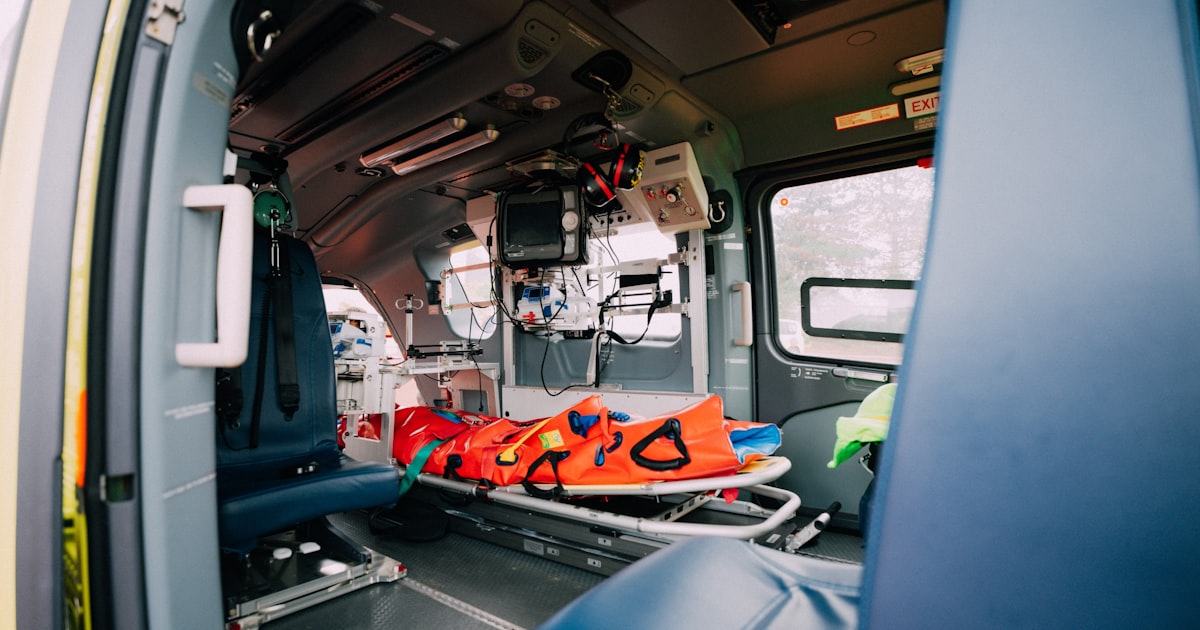
Photo: Mathurin NAPOLY / matnapo on UnsplashThis image was sourced from Unsplash. JobXi accepts no responsibility for its content.
Industry News
Notice something? The jump from entry-level to mid-career is about $15,000. That's a 29% increase. Between mid-career and senior roles, it's another $15,000. These aren't small raises — they reflect the massive difference in responsibility. A senior flight paramedic doesn't just run calls; they mentor new hires, handle complex scene management, and often take on night shifts that command premium pay.
The entry-level ceiling is real. Almost no flight paramedic program will pay you $70,000 in your first year, no matter how good your ground experience was. Plan on building two to three years in the field before you see that jump.
You'll notice Alaska tops the list. That's not a cost-of-living adjustment — Alaska's cost of living is actually pretty reasonable outside of Anchorage. The premium comes from a true shortage of qualified providers willing to live in remote areas. California pays high raw numbers, but you lose a lot to housing costs. Houston hits a sweet spot: solid salary, average cost of living, and you're working for a world-class hospital system.
Don't ignore the smaller markets. Cities like Cincinnati ($68,000), Raleigh ($66,000), or Salt Lake City ($69,000) might not headline the chart, but adjusted for housing costs, your take-home dollar goes further.
Flight Paramedic Salary in 2026: What You'll Actually Earn
JobXi Editorial Team·May 17, 2026
TL;DR
- National median salary for flight paramedics in 2026 is projected at $68,000, but the top 10% earn over $95,000.
- Experience is the biggest lever: a senior flight paramedic with 10+ years can earn 40% more than someone in their first year.
- Location matters massively — paramedics in Alaska and California out-earn those in the Southeast by $20,000+ for the same role.
National average and what it doesn't tell you
Let's cut through the noise. When you search "flight paramedic salary," you'll see a number around $72,000 for 2026. That's the national average, and it's not exactly wrong — but it's dangerously misleading. Here's the thing: averages lump together everyone from a rookie in rural Montana to a 15-year veteran working for a top-tier hospital system in San Diego. Those two people aren't in the same profession, even if their titles match. The 2025 Bureau of Labor Statistics data, adjusted for 2026 projections, shows the 10th percentile sits at roughly $48,000. The 90th percentile? Over $97,000. That's a $49,000 spread. Let's be real: you need to know where you land, not where an imaginary average person lands. Why the gap? First, flight paramedic roles aren't all the same. Some work for private air ambulance companies that treat the role like an entry-level stepping stone. Others work for hospital-based programs that require years of ground ICU experience and pay accordingly. Second, cost of living adjustments shift things dramatically. A $68,000 salary in rural Texas is comfortable. The same number in Manhattan? You'll have roommates. In practice, the single most useful figure is the median: $68,000. Half of flight paramedics earn less, half earn more. But to understand where you'll actually fall, we need to break this down by experience, location, and the specifics of the job itself.Salary by experience level
Experience isn't just a number on your resume. In flight medicine, it directly translates to how many high-acuity calls you can handle without a second set of hands. Employers pay for that confidence. Here's what the 2026 projections look like for a typical career trajectory:| Experience Level | Years of Experience | Median Salary | Typical Employer |
|---|---|---|---|
| Entry-level | 0–2 years | $52,000 | Private air ambulance, rural services |
| Mid-career | 3–7 years | $67,000 | Regional hospital systems, larger private firms |
| Senior / Lead | 8–15+ years | $82,000 | Level I trauma centers, government contracts |
| Director-level | 10+ years with management | $95,000+ | Large hospital networks, state programs |
Top-paying states and cities
Location is the difference between "I'm scraping by" and "I'm saving for a house." Here are the highest-paying states and cities for flight paramedics in 2026, based on industry surveys and job posting data:| State / City | Median Salary | Cost of Living Index | Key Employers |
|---|---|---|---|
| Alaska (Anchorage) | $87,000 | 125 (high) | LifeMed Alaska, Guardian Flight |
| California (San Diego) | $84,000 | 150 (very high) | Mercy Air, REACH Air Medical |
| Texas (Houston) | $72,000 | 96 (average) | Memorial Hermann Life Flight, PHI Air Medical |
| Colorado (Denver) | $76,000 | 110 (slightly high) | Air Life Denver, Critical Care Transport |
| Florida (Orlando) | $63,000 | 98 (average) | Orlando Health, Air Methods |
| New York (New York City) | $78,000 | 187 (very high) | NYC Health + Hospitals, hospital-based programs |
What actually drives salary up or down
You've seen the numbers. Now let's talk about the levers you can actually pull. Here's what moves the needle: Flight hours and certifications matter more than education. A bachelor's degree is nice, but employers care about your FP-C (Flight Paramedic Certification) and your total flight hours. Earning your FP-C typically adds $3,000–$5,000 to your salary within the first year. A critical care endorsement (CCP-C) can push that further. Employer type changes everything. Private air ambulance companies (Air Methods, PHI) tend to pay a base salary plus flight-hour bonuses. A busy year with high call volume can add $8,000–$12,000. Hospital-based programs pay higher base salaries but often cap overtime. Government roles (state contracts, federal agencies) have lower starting salaries but better pension benefits — think 5-10% matching on a 401(k). Night shifts and location difficulty pull in premium pay. A flight paramedic working 24-hour shifts in a rural service area might earn a 15% shift differential. If you're willing to work the overnight rotation in a remote part of Texas, you can clear $75,000 by year three. Conversely, a 9-to-5 schedule in a city-based program caps your earning potential unless you pick up extra shifts. Union status is real. Flight paramedics at unionized services (some hospital networks, certain state contracts) earn 12-18% more on average than non-union counterparts. They also have defined salary scales, which means you avoid the "ask for a raise or stay at $62K forever" problem. Downward pressure: oversaturation. In major metro areas, competition is fierce. Five candidates for every open slot in cities like Phoenix or Atlanta. That cratered salaries there compared to underserved rural regions. It's a market that rewards relocation.How to negotiate your Flight Paramedic salary
Most paramedics hate negotiating. You're not alone. But here's the truth: you can add $4,000–$6,000 to your starting offer with three simple moves. 1. Know your floor. Before you walk into any interview, decide your minimum acceptable salary. If a low-cost city like Houston offers $62,000, that's a no. You can live on $62,000, but you're leaving $10,000 on the table compared to a more expensive city. The minimum should be tied to the area, not a universal number. 2. Use your certifications as leverage. In your interview, don't just list your FP-C. Say, "My FP-C certification means I can handle complex interfacility transports without a nurse escort, which reduces staffing costs by 20% per shift." That's not bragging — it's data. Many programs pay a certification bonus of $2,000–$3,000 annually. Ask if they have that policy, and if they don't, suggest they create one for you. 3. Ask for the "flight hour bonus" structure. Some private employers hide this on purpose. Say: "I'm eager to commit to a program that values production. Can you show me the average annual bonus for a paramedic working 80 flight hours per month?" If they dodge, it's a red flag. If they quote $6,000–$10,000, you're in a good place. 4. Don't forget the benefits basket. Flight paramedic roles often include tuition reimbursement, better health insurance, or sign-on bonuses. A $65,000 salary with $5,000 sign-on and full health coverage beats $70,000 with a $3,000 deductible. Calculate the total compensation package, not just the W-2 line. 5. Practice your "no thanks" number. If the offer comes at $52,000 for your first year in a rural area, you can say, "I appreciate the offer. Based on my FP-C certification and two years of ground ICU time, I need $58,000 to make this work. Is that possible?" The worst they say is no. But the no-ask almost guarantees you leave $3,000–$6,000 on the table. Final thought: a well-negotiated starting salary compounds. That extra $5,000 in year one means higher raises (often percentages) in years two, three, and beyond. Don't be the paramedic who walks away saying "at least I got the job." You got the job, now get the right paycheck. If you're ready to find the role that matches your skills and salary expectations, explore current opportunities at open Flight Paramedic jobs on JobXi. The right job is out there — and now you know what it should pay.Editorial Notice JobXi compiles its content by researching third-party websites, industry publications, search engines, and publicly available data sources. Salary figures, requirements, timelines, and other details reflect general market research and may vary by employer, location, and economic conditions. We recommend verifying any information with official sources, employers, or relevant professional associations before making career or financial decisions. JobXi accepts no liability for decisions made based on this content.