How to Become a OR RN: A Realistic Step-by-Step Guide
- Becoming an OR RN requires a BSN (or ADN with a bridge), 1-2 years of med-surg experience, and the CNOR certification to be competitive — not just a license and a pulse.
- Expect 40-60 hour weeks, standing for 8-12 hours per case, and handling sharp instruments alongside high-stakes emergencies. It's not "glamorous," but it pays well.
- Skip the mistake of applying without shadowing first: OR work is nothing like floor nursing. Most newbies wash out within six months if they don't understand the pace.
What the job actually involves (honest, not glossy)
Let's clear something up right now: being an Operating Room RN isn't like what you see on TV. You're not the surgeon's witty sidekick. In reality, you're the person counting sponges, managing sterile fields, and making sure no one touches a contaminated surface. It's precise — often tedious — work that demands obsessive attention to detail.
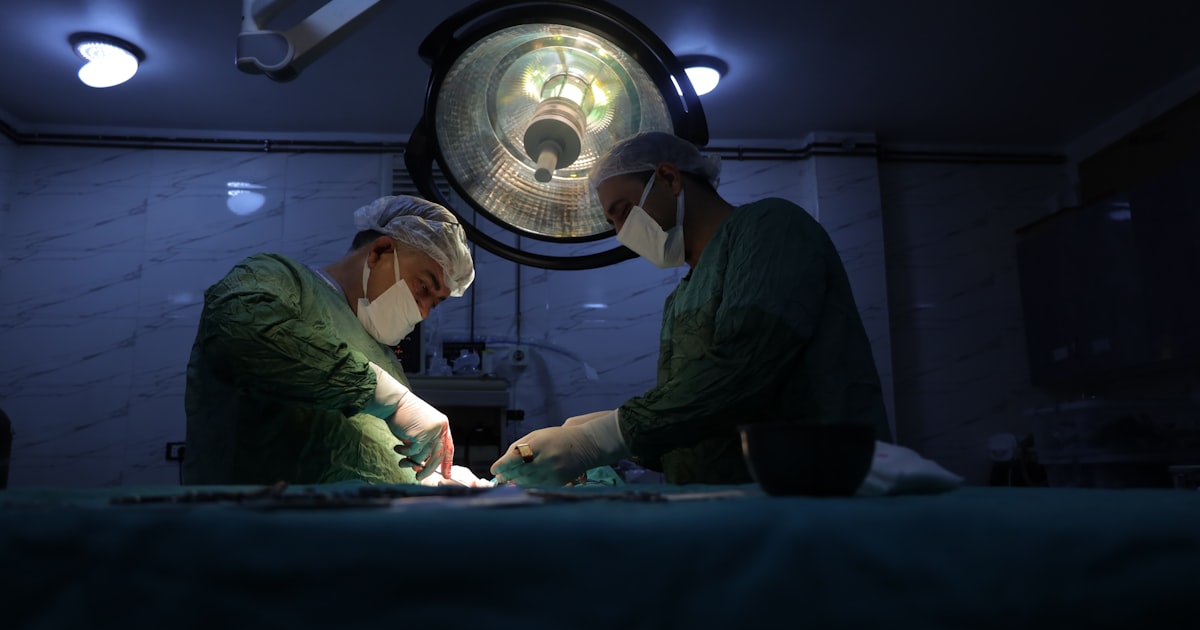
A typical shift starts before the patient rolls in. You'll set up the room: check equipment, arrange sterile supplies, verify the consent form matches the procedure. Then the patient arrives, you confirm their identity and surgical site for the third time, and the team scrubs in. From there, it's hours of standing. Eight hours. Ten hours. Sometimes twelve. Your back will ache, your feet will throb, and you'll learn the exact angle to stand at so the surgeon doesn't elbow you in the ribs.
You'll handle three distinct roles depending on the day: circulating nurse (moving in and out, bringing supplies, documenting), scrub nurse (gloved and gowned at the table, handing instruments), and sometimes first assistant (helping with retraction and suturing under the surgeon's direction). Each role has its own rhythm. Circulating is more administrative and physical. Scrubbing is more technical — you memorize the names of two hundred instruments and anticipate what the surgeon needs before they ask.
Here's the part no one tells you: the emotional toll. You'll see patients up close — scared, sedated, vulnerable — and then you'll see their insides. Blood, fat, organs. Some cases are routine (gallbladders, hernia repairs). Others are traumatic — a car accident, a gunshot wound, a ruptured aneurysm. You have to compartmentalize fast. There's no time to cry while someone is bleeding out.
The schedule is a double-edged sword. Many OR nurses work four 10-hour shifts or three 12-hour shifts with on-call rotation. That means you might get three days off per week, but you could also get called in at 2 AM for an emergency appendectomy. Weekends and holidays? They happen. But the trade-off is flexibility — and often, overtime pay that pushes your annual income well past the base rate.
Qualifications and education — required vs. nice-to-have
The baseline is a nursing license from an accredited program — either a diploma from a hospital school (rare nowadays), an Associate Degree in Nursing (ADN), or a Bachelor of Science in Nursing (BSN). Most operating rooms, especially in Level 1 trauma centers or academic hospitals, require a BSN. Community hospitals and outpatient surgery centers sometimes accept an ADN, but you'll hit a ceiling quickly.
| Credential | Required for entry? | Why it matters |
|---|---|---|
| ADN | Yes (many places) | Gets you licensed, but courses you out of $10,000-$30,000 in earnings over a career vs. BSN nurses |
| BSN | Preferred by 75%+ of hospitals | Required for Magnet status hospitals; essential for CNOR and advancement |
| RN license (NCLEX-RN) | Required (non-negotiable) | You can't work without passing this — pass rate is about 85% first try |
| BLS (Basic Life Support) | Required | All RN jobs require this; usually good for 2 years; renewal costs $50-100 |
| ACLS (Advanced Cardiac Life Support) | Required in most ORs | Covers cardiac arrest scenarios; many hospitals pay for certification |
| CNOR (Certified Perioperative Nurse) | Nice-to-have, but often required after 1-2 years | The gold standard; requires 2,400 hours of perioperative experience; raises salary by 5-10% |
| Experience in med-surg or ICU | Often required (1-2 years minimum) | Builds critical thinking for emergency calls and patient monitoring |
Here's the thing: don't let anyone tell you that you can waltz into an OR straight out of nursing school. Some accelerated OR programs exist (called "perioperative 101" courses), but they're rare and competitive. The realistic path? Get your BSN, pass the NCLEX, work med-surg for 12-18 months, then apply to an OR unit. That's the standard timeline — roughly 2-3 years from graduation to your first scrub assignment.
Step-by-step path to land the role
- Earn your BSN (or ADN with a bridge plan). Full-time BSN programs take 4 years. ADN takes 2 years, but you'll need a BSN within 5 years for most hospitals. Online bridge programs exist — Western Governors University and Chamberlain are common options. Tuition ranges from $12,000 (ADN) to $40,000+ (BSN).
- Pass the NCLEX-RN on your first attempt. Study for 4-8 weeks using UWorld or Kaplan. The test is adaptive — it gets harder as you answer correctly. Budget $200-400 for prep materials and $200 for the exam fee.
- Land a med-surg or progressive care job for 1-2 years. This isn't a waste of time. You'll learn to manage bleeding, monitor vitals under stress, and coordinate with surgeons during emergencies. A med-surg job in a hospital that has an OR department is ideal — you can build connections for an internal transfer.
- Get your foot in the door — shadow an OR nurse for 3-4 shifts. Most hospitals allow this. You'll see if the pace, pressure, and physical demands fit you. Many ORs hire RNs who have already shadowed — it shows initiative and reduces the risk of hiring someone who quits after orientation.
- Apply for an OR nurse residency or perioperative training program. These are formal programs (12-24 weeks) that teach you sterile technique, instrument handling, and circulating duties. They're competitive: expect to interview with the OR manager and a surgeon or two.
- Complete your orientation and pass the CNOR exam. After 2 years of OR-specific experience, sit for the CNOR. The exam costs $395 for AORN members ($165 annual membership) or $520 for non-members. Most hospitals reimburse the cost if you pass.
- Consider specialization. You don't have to stay a general OR nurse forever. Specializing in orthopedics, neurosurgery, or cardiovascular OR raises your pay ceiling. Neurosurgery OR nurses, for example, earn 15-20% more than general OR nurses.
Salary by experience level
| Experience level | Annual salary (10th-90th percentile) | Hourly rate | Notes |
|---|---|---|---|
| Entry-level (0-2 years) | $58,000 - $72,000 | $28 - $35 | Most start with ADN/BSN; CNOR not yet |
| Mid-career (3-5 years) | $72,000 - $90,000 | $35 - $43 | CNOR helps; extra for on-call rotation |
| Experienced (6-10 years) | $88,000 - $110,000 | $42 - $53 | Includes specialized OR |
| Senior/lead (10+ years) | $105,000 - $135,000 | $50 - $65 | Plus overtime; often management roles |
Those numbers come from 2023-2024 BLS data and AORN salary surveys. High-cost areas like New York, San Francisco, and Seattle push the top end 20-30% higher. Overtime is real — working two extra 12-hour shifts per month can add $15,000-20,000 to your annual income.
Common mistakes first-timers make
Mistake #1: Thinking OR nursing is "easier" than floor nursing. It's not easier — it's different. You don't manage multiple patients at once, but you manage one patient under anesthesia with life-threatening risks. The stakes are higher. One wrong move can mean an infection that kills someone.
Mistake #2: Not shadowing before applying. Honestly, this is the biggest one. Operating rooms are cold (literally — they're kept at 68-70°F), sterile, and quiet during surgery. You don't get breaks when you want them. If you can't stand for hours or handle the sight of blood, you'll know in the first shift. Shadow first — it's free and can save you two years of misery.
Mistake #3: Skipping the BSN. You can get an ADN and start working sooner, but most hospitals that pay well — like teaching hospitals and trauma centers — require a BSN within two years of hire. You'll spend more time and money chasing that degree later, so just start with the BSN.
Mistake #4: Ignoring the sterile field rules. In your first week, you'll watch students accidentally contaminate a tray. Don't be that person. Every movement is deliberate — you step back from sterile boundaries, you don't reach over the table, you cover your cough. Breaking these rules gets you pulled from cases and can ruin your reputation.
Mistake #5: Burning out from on-call. New OR nurses often say "yes" to every on-call shift to prove themselves. Bad idea. Within 6 months, you're exhausted and resentful. Set boundaries early — take your scheduled on-call, but don't volunteer for every extra shift.
Where to find OR RN jobs
You can start your search on general job boards, but for the best results, look specifically for listings that mention "perioperative," "OR circulator," "scrub nurse," or "surgical services RN." University hospitals and large health systems like HCA, Kaiser, and Mayo Clinic post openings daily. If you're in or open to relocating to New York, check out open OR RN positions on JobXi — we curate listings from the region's major medical centers, including NYC Health + Hospitals, NYU Langone, and Mount Sinai. Filter by "perioperative" and watch for sign-on bonuses (some hospitals offer $10,000-15,000).
That's the path. It takes about 2-3 years after nursing school to land an OR role, but the payoff — a focused, hands-on environment with strong salary growth — makes it worth the climb. Now go shadow an OR nurse, and see if this world fits you.